Valorant Esports Reshuffles: 32 Partner Teams, DRX Left Out
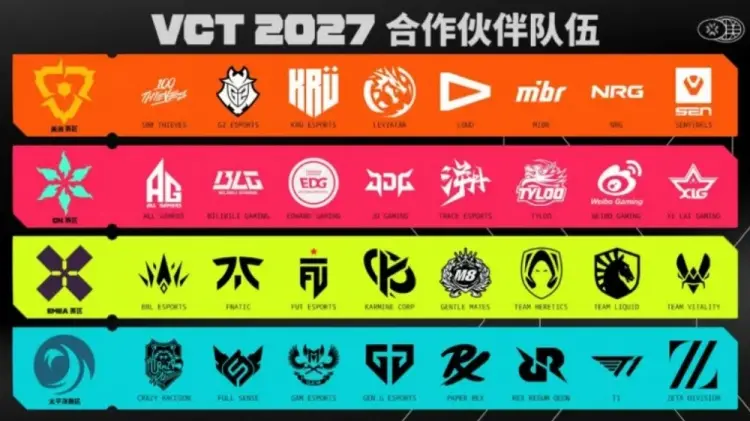
Valorant’s top-tier competitive circuit is being rebuilt from the ground up, and the first casualty is one of its best-known names. On October 22 the Valorant Champions Tour (VCT), the official global competition for the tactical shooter, confirmed a new partnership system for the 2027 season: 32 teams, split evenly across the Americas, EMEA, Pacific and China regions, eight per region. Each partnership runs for a two-year term that can be renewed, and every selected team earns direct entry to the 2027 VCT season-opening event.
The announcement was framed as the start of a fresh chapter for the game’s esports scene. But the more telling news arrived alongside it, because the list also functions as a cut. Teams that miss out lose the guaranteed slot, the revenue share and the stability that partnership brings — and at least one organization reacted immediately.
KIWOOM DRX, the Korean outfit long regarded as a pillar of the Pacific scene, confirmed it was not among the 32 and announced sweeping changes to its Valorant division. The entire coaching staff will depart, including termi and ARGENCY, who have worked on the team since its Vision Strikers days and stayed through the transition to the DRX era, and OD, who oversaw the academy squad and young-player development. Multiple players are leaving as well. The statement read like a full reset rather than a tweak.
The change is not confined to Korea. The partner list reshapes the map for every region: teams that had grown used to a guaranteed seat now face the possibility of playing their way in, while organizations outside the old circle see an opening. The two-year, renewable structure gives Riot a regular moment to review who belongs, which makes each cycle a high-stakes audition.
Players are moving too. T1’s Meteor posted an LFT — looking for team — notice on social media, saying he is open to offers from Korean, Japanese and Chinese organizations. His pitch was straightforward: he wants to share the experience he has accumulated and join a team that genuinely needs him and is pushing to win. Such public availability notices have become a routine part of the esports off-season, but a player of his profile testing the market underlines how unsettled the Pacific rosters are right now.
For fans, the practical effect is a compressed off-season of roster moves, academy promotions and organizational soul-searching, all before the 2027 season-opening event. The 32 selected teams will spend the coming months building for a fresh start; the rest must decide whether to rebuild, sell, or step back. DRX’s decision to clear out its coaching bench and roster in one stroke is the clearest signal yet of how much a partnership slot is worth — and how much its absence costs.
The next thing to watch is the 2027 season-opening event itself, where the eight teams from each region will finally meet on stage. How the newly confirmed partners perform, and whether any excluded organization can fight its way back through the open qualifiers, will define whether the new system delivers the competitive depth it promises.