SoftBank's AI Bet Draws a 432-Basis-Point Warning From Credit Markets
Masayoshi Son has never been shy about betting big on the future. This year the future he is buying is artificial intelligence, and the bill is large enough that Wall Street has started shopping for insurance against the possibility he cannot pay it.
The clearest gauge sits in the credit default swap market, where investors buy protection against a company failing to repay its debt. On October 20, SoftBank’s five-year CDS price rose to 432 basis points, the highest level since November 2022. A CDS spread is not a forecast of default, but it is a price: the higher it goes, the more investors are willing to pay to hedge the risk that SoftBank’s obligations go bad.
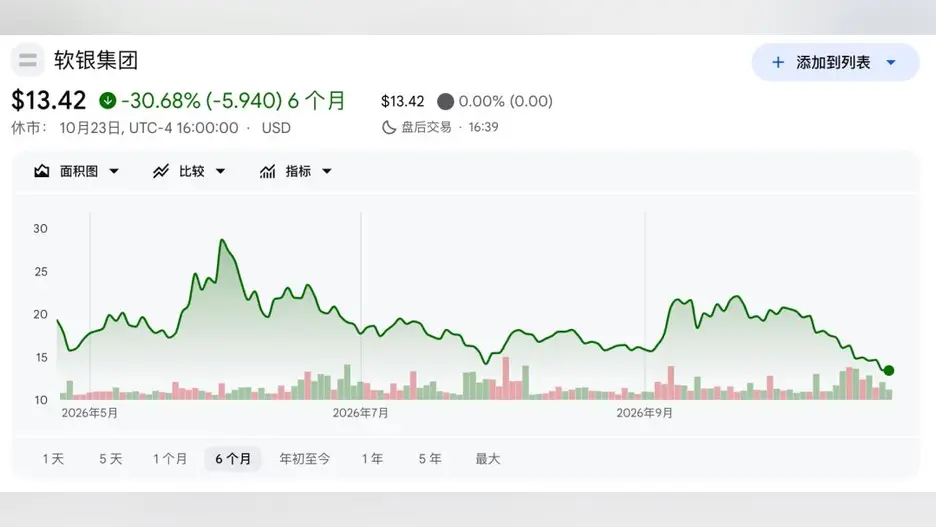
What makes the number notable is the contrast. SoftBank’s equity story has been one of aggressive expansion into AI, with Son positioning the Japanese group as a backer of the computing build-out that has lifted technology valuations worldwide. The credit story is more cautious. Bondholders do not share in the upside if an AI investment triples; they only care whether interest and principal arrive on time.
That asymmetry explains why a company can be celebrated in one market and questioned in another at the same moment. SoftBank’s spending has been described as relentless, and the CDS move suggests investors are now weighing how much of that spending is funded with debt or obligations that rank ahead of future AI payoffs. The cost of protection is a proxy for how much uncertainty the market assigns to that structure.
The signal matters beyond SoftBank because the company has become one of the most visible financial vehicles for the global AI boom. When its credit risk is repriced, it says something about how investors view the financing of AI infrastructure more broadly: the chips, data centers and power contracts that underpin the technology all require capital, and someone has to carry the risk while returns arrive.
It is worth being precise about what a 432-basis-point spread does and does not mean. It is a four-year high for this particular insurance, not a distress level. Plenty of companies with ambitious investment programs trade at elevated protection costs during periods of rapid expansion. The relevant question is whether the trend continues: a single reading can reflect positioning and liquidity as much as fundamentals, while a sustained climb would suggest credit investors see the spending as increasingly hard to service.
For global readers watching the AI trade, SoftBank is a useful bellwether precisely because it sits between the technology and the money. Its equity reflects optimism about what AI could become; its CDS reflects the cost of assuming it might not. When those two measures diverge sharply, the gap is where the real debate lives.
Son, for his part, has not signaled any retreat. The story to watch is not whether he keeps spending, but whether the price of insuring that spending keeps rising.