After Denmark, a Widow Brings Her In-Laws to Qingdao
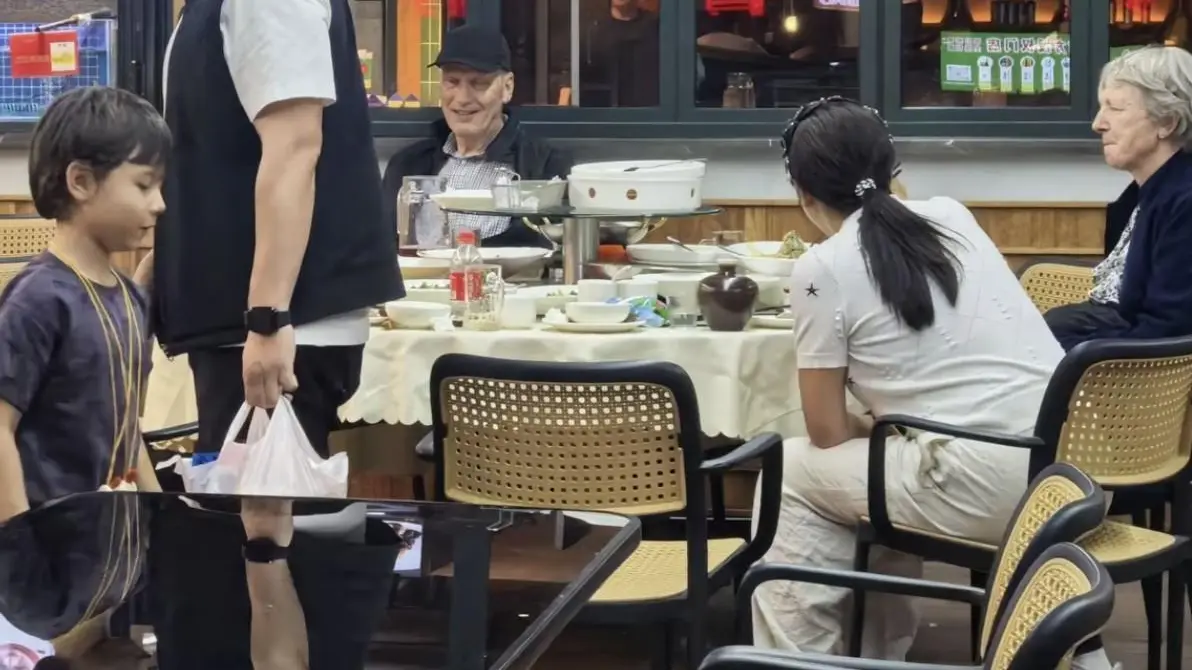
A video about a family photograph has been circulating widely in Chinese entertainment feeds this week, and the reason is simple: it is not really about the photograph. The creator, known to her Chinese audience as Mige, is a woman from China who has spent years living in Denmark. Her husband, Stephen, died in a skydiving accident in Thailand years ago, when a rescue effort did not reach him in time. She has since raised their son, nicknamed Xiao Quqi, alone in Denmark.
What makes her story unusual is the company she keeps. Her Danish in-laws, Stephen’s parents, stayed close to her and to their grandson rather than drifting away after their son’s death. In many families, a widow and her late husband’s parents slowly lose touch; here the opposite happened. The grandparents helped raise the boy, and Mige kept them inside the frame of her daily life. That arrangement, quiet and undramatic, is the real subject of her channel.
Her latest project was to bring the older couple to China. The trip took them to Qingdao, the coastal city in Shandong province known for its beaches, German-era architecture and seafood. Qingdao is also a place many Chinese viewers associate with summer holidays, which made it a gentle introduction for first-time visitors to the country. One relative, referred to as Uncle Wang, did not join the group, a detail regular viewers noticed immediately in the comments.
The emotional centre of the video is a photograph. Mige had a family portrait restored and completed so that Stephen appears in it alongside his parents, his son and her — a version of the family that never got to exist in life. When the grandparents saw it, they cried, and the camera caught it. The moment landed with Chinese viewers because it touches something universal: the wish to give the dead a place at the table, and to give the living proof that they were loved.
Mige’s story sits inside a larger phenomenon. Chinese-language vlogs about life abroad have grown into a substantial genre, and the most successful ones are rarely about sightseeing. They are about translation — of customs, of family structures, of what counts as polite. A Chinese daughter-in-law explaining Danish birthday traditions, or Danish grandparents learning to eat with chopsticks in Qingdao, does more cultural work than a travel montage ever could.
Grief is harder to translate. Viewers who have followed Mige for years have watched her move from raw loss to something steadier, and the in-laws have moved with her. The photograph is a small artifact, but it marks a decision: this family will keep including the person who is missing. For an international audience unfamiliar with the story, the appeal is not exotic. It is the recognition that families are made by who keeps showing up.
There is also a practical lesson buried in the sentiment. Cross-border families face paperwork, distance and language, and Mige has been unusually open about all of it — visas, schools, the cost of flying ageing parents halfway around the world. None of that makes for viral clips, but it is what makes the reunion possible.
What the video offers, finally, is a reminder about the ordinary machinery of belonging. A widow in Denmark, two grandparents, a boy who never met his father, and a coastal city in China: put together, they look like a family photograph, and the point is that they decided to be one.