Mercedes-Benz Took a 12-Week Pause to Rebuild Trust
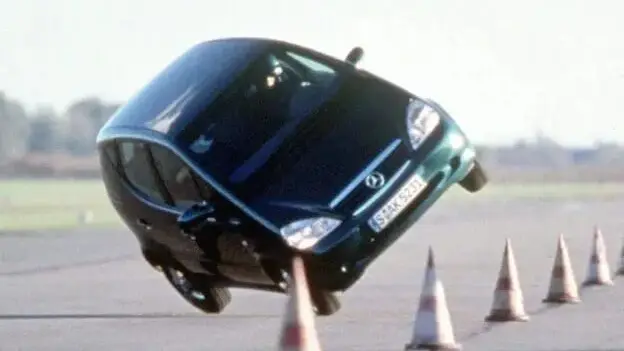
For twelve weeks, Mercedes-Benz stopped handing over certain cars to customers. Not because of a parts shortage, not because of a strike, and not because of a demand collapse. The company paused deliveries after a testing mishap raised uncomfortable questions about how its driver-assistance systems were being validated before they reached public roads. In an industry that measures success in weekly delivery numbers, voluntarily giving up a quarter of a year of handovers is close to unthinkable.
The logic behind the pause is worth unpacking. Modern cars are no longer finished products at the factory gate. A vehicle sold today may receive dozens of software updates over its lifetime, each one capable of changing how the brakes, steering or driver-assistance features behave. That means the real safety work happens long after the sale, which makes a flawed validation process far more dangerous than a flawed bolt. If the testing regime itself is unreliable, every conclusion drawn from it becomes suspect.
That is why the fix was not a simple patch. Reports suggest the company went back to the foundations: how test scenarios are designed, how edge cases are logged, how engineering teams sign off before a feature ships, and how quickly a problem found in one market is communicated to others. This is slow, unglamorous work that produces no headline-grabbing launch event. It also happens to be the only way to make an automated driving promise credible.
The timing is brutal. Chinese automakers are pushing advanced assistance features into ever cheaper models, and European rivals are under pressure to match both the capability and the price. In that environment, a twelve-week stop looks like a self-inflicted wound. But the alternative, shipping a system that fails in a rare but foreseeable situation, can cost far more than lost sales. A single high-profile crash can set a brand’s autonomy ambitions back by years and invite regulators to write rules the industry will hate.
There is also a quieter commercial calculation. Buyers paying a premium for a three-pointed star are not only purchasing leather and horsepower; they are purchasing the assumption that the company checked twice. That assumption is the actual product. Once it cracks, discounts do not repair it. Time, transparency and visible engineering discipline do.
The twelve weeks bought something that is hard to put on a specification sheet: a validation process the company can defend in public. Whether rivals will follow suit is an open question. Most are still optimizing for speed, because speed is what showrooms and shareholders reward. But the episode sets a marker. In the shift from mechanical engineering to software-defined vehicles, the companies that treat testing as a cost center will eventually pay for it somewhere else, usually in a recall or a courtroom.
For global readers watching China’s auto market, the lesson travels. Chinese brands are winning on features and price, and they are moving fast. The next competitive frontier may not be who ships the cleverest system first, but who can prove, repeatedly and boringly, that it works when the road stops behaving. A car that drives itself is only as good as the tests nobody sees.