Why Two Nearly Identical Pearls Can Differ Tenfold in Price
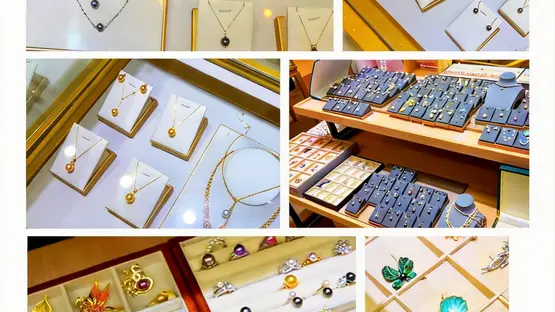
Two pearls sit side by side on a counter. To the untrained eye they look like twins. One costs 300 yuan, the other 3,000. The natural reaction is suspicion: someone is being cheated. But according to an explainer from the Chinese science outlet Guokr, most of that gap is not a scam, even if shady sellers and luxury brand markups exist. It is grading, and grading has a lot of moving parts.
The first fork in the road is water. Freshwater pearls, grown in mussels in lakes and rivers across provinces such as Zhejiang and Jiangsu, are farmed in large numbers and are generally affordable. Saltwater pearls come from oysters in bays and open sea, cost more to raise, and carry names collectors know: Akoya from Japan, Australian South Sea whites, Tahitian blacks, and the golden South Sea varieties. Each has its own market, its own supply rhythm, and its own price ladder.
Then comes size, measured in millimeters. A single millimeter sounds trivial until you remember that pearls grow in thin layers over years. Moving up one size band can cut the number of usable gems dramatically, and the price steps up accordingly. Luster matters just as much. A pearl with a deep, mirror-like sheen that seems to glow from inside commands far more than a chalky one, even at identical diameter. Surface quality is the next filter: tiny pits, ridges or blemishes that you cannot see across a room can be obvious under a jeweler’s lamp.
Color adds another layer. Beyond white, pearls can carry pink, silver, cream, green or gold tones, and the subtle secondary glow known as overtone changes value. Roundness is graded too, from perfect spheres down to baroque shapes. A pearl that is large, round, clean, and lustrous across every category is rare, and rarity is what buyers are really paying for.
The explainer’s most striking point is that pearl farming is a gamble even for professionals. Inside a single oyster or mussel, no one knows in advance whether the result will be round or lopsided, bright or dull. Farmers open thousands of shells to find a handful worth setting in gold. That uncertainty is baked into the price of every good pearl, because the cost of the disappointments has to be recovered somewhere.
For shoppers, the practical lesson is that price differences are usually about measurable traits, not magic. Ask about water type, size in millimeters, luster, surface grade and overtone. Compare pearls under the same light, since warm shop lighting flatters everything. A cheap pearl is not automatically a fake, and an expensive one is not automatically a treasure. The gap between 300 and 3,000 yuan is often the gap between ordinary and exceptional, decided years earlier inside a shell nobody could see through.