A Chinese Tech School Sends 101 Graduates to Work at Peking University
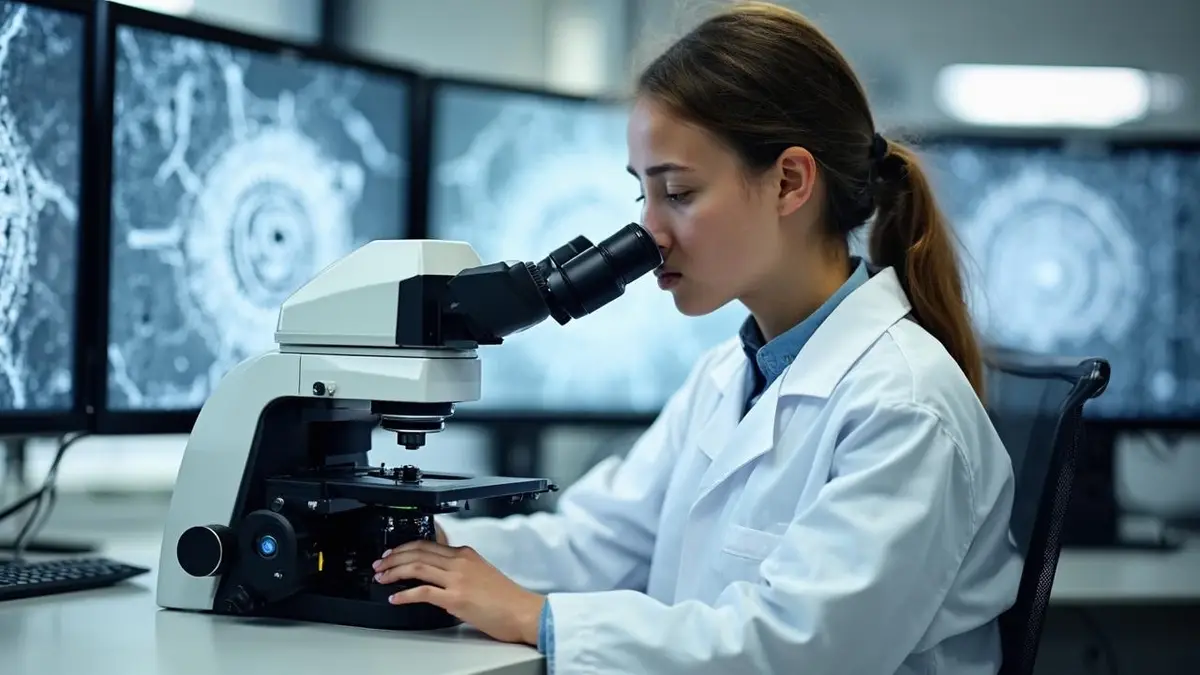
A small vocational school in Henan province has quietly become one of the most unusual talent pipelines in Chinese higher education. According to a report that has climbed to the top of Zhihu’s trending list, 101 of its graduates have gone on to work at Peking University — not as students, but as research assistants in laboratories. The school’s director told reporters that its electron microscopy technology program is the only one of its kind in China, and that students are frequently snapped up by employers while still in their second year.
The phrase the school uses to describe its mission has struck a chord online: “Our students didn’t get into Peking University or Tsinghua, but they can go work at Peking University and Tsinghua.” It is a neat reversal of the usual hierarchy. In China, admission to a top university is treated as a life-defining achievement, and vocational education has long been seen as a fallback. Here, a group of students who took a different path are ending up inside the country’s most prestigious institutions anyway, operating the powerful microscopes that underpin research in materials science, biology and nanotechnology.
Electron microscopy is a demanding field. It requires steady hands, patience and a deep understanding of how electrons interact with matter. Operators must prepare delicate samples, align complex lenses and interpret images that reveal structures far smaller than the wavelength of light. It is also a field with a chronic shortage of skilled technicians. Research universities and semiconductor companies alike struggle to find people who can run the machines reliably, which explains why students are being recruited so early.
The story has sparked a wider conversation about what success in education should look like. For years, Chinese families have poured resources into the gaokao, the national college entrance exam, treating it as the only road to a good life. But as the economy matures, demand is growing for skilled technicians who can fill specialized roles that a general university degree does not prepare students for. The country has been pushing to raise the status of vocational training, though deep cultural attitudes change slowly.
What makes this case compelling is the sheer specificity of the skill. This is not a story about generic factory work or a broad push to send more students into technical fields. It is about one school that found a narrow niche and filled it so well that the country’s best universities come knocking. The students may not sit in Peking University lecture halls, but they walk its corridors, badge in hand, and their work contributes directly to the research that emerges from its labs.
The school’s appearance at the World Skills Competition, an international contest for vocational students, has added to its reputation. Such events are a source of national pride in China, where medal winners are often celebrated like athletes. For this Henan college, the stage offered proof that a narrow specialty, taught well, can open doors that many families never imagined.
For global readers, the story is a reminder that the road into elite science is not always through the front gate. Behind every published paper and breakthrough experiment is a chain of skilled hands, and some of the most important ones belong to technicians who trained in a program most people have never heard of. In a country as vast and competitive as China, that quiet pipeline may be one of the most valuable assets of all.