Why China's Smart Cars Wear a Little Blue Light
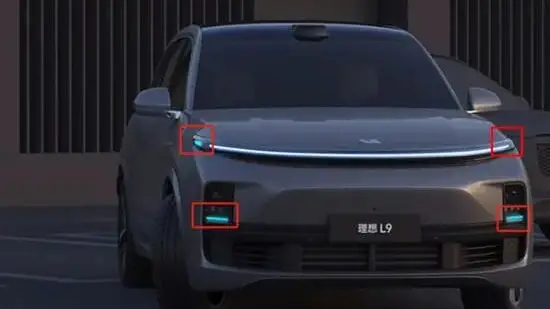
In August 2022, Li Auto quietly added a new detail to its L9 SUV: a small blue light at the front and rear. When it glowed, people nearby understood something simple and slightly futuristic — the car was driving itself. The lamp was not a safety requirement. It was a signal, and it caught on fast.
Within months, videos and photos of the blue light spread across Chinese social media. Drivers filmed it at dusk, in traffic, on highways. Other automakers noticed the attention and began fitting similar lights to their own assisted-driving models, then putting them in commercials. The little lamp became one of the few visible, photographable and shareable symbols of an intelligent car — a way for owners to show off a feature that is otherwise invisible from the outside.
The appeal is easy to understand. A car that drives itself looks, from the outside, exactly like a car that does not. The blue light gives that invisible capability a face. It tells pedestrians, other drivers and passengers that the software is in charge, at least for now. In a market where almost every new electric model advertises some form of driver assistance, that cue carries real marketing value.
But the glow also created confusion. A blue light on one brand may mean something different from the same light on another. Some systems require the driver to keep hands on the wheel; others allow brief hands-free driving on approved roads. To a pedestrian, the light looks identical. Regulators and safety advocates began asking whether a symbol that looks like a promise of autonomy should be standardized, restricted, or left to each company’s discretion.
By late July 2026, the lamp’s situation had changed. The eye-catching blue glow that once seemed like a harmless flourish had become part of a broader conversation about how drivers and the public understand automated systems. The question was no longer whether the light looked cool. It was whether a car should broadcast a mode that its driver may not fully understand — and whether that broadcast helps or misleads the people around it.
The story of the blue light mirrors the wider arc of China’s smart-driving industry. Features arrive quickly, spread through social media, and become selling points before rules catch up. Carmakers compete on visible signals because buyers respond to them. Yet trust in driver assistance depends less on a glowing lamp than on clear limits: what the system can do, when it will hand back control, and what the driver must still watch.
For global readers, the lesson is that automation is as much a design and communication problem as an engineering one. A small light can build familiarity and excitement, but it can also imply more capability than exists. How China’s automakers and regulators resolve that tension will shape not only the next generation of cars but also how the public learns to read them.
What began as a styling detail on one SUV has become a test case for the industry. The blue light showed that people want to see autonomy, not just hear about it. The harder task is making sure what they see tells the truth.