SK Hynix Halts Solidigm IPO as Memory Prices Keep Climbing
Memory chip prices are still rising, but one of the industry’s biggest names has decided it does not want to go public after all. On October 23, SK Hynix announced it was suspending the pre-IPO financing and listing plans for its US subsidiary Solidigm, the storage business it acquired after Intel sold its NAND flash unit. The decision came despite earlier reports that Solidigm could have been valued at up to $150 billion and might have raised as much as $15 billion, numbers that would have made it one of the largest semiconductor listings in years.
The timing is telling. Capital markets have turned turbulent, semiconductor share prices have been adjusting downward, and regulatory scrutiny of repeated listings has added friction in South Korea. For a company that sits in the middle of the AI-driven memory boom, waiting for a calmer window may look prudent. But the pause also raises questions about how much of the current chip enthusiasm is already priced in.
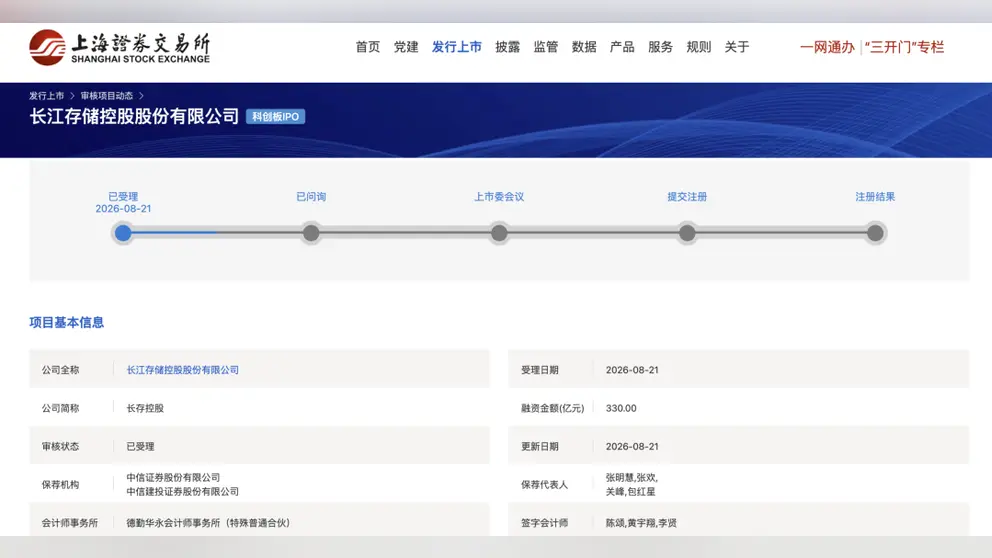
Solidigm’s story is closely tied to China. Its main manufacturing base is in Dalian, a port city in northeastern China, where Intel once ran a major NAND flash plant. SK Hynix inherited that facility through the acquisition, making the subsidiary a bridge between American technology and Chinese production capacity. Local suppliers and the city of Wuhan, which has bet heavily on its own memory champion Yangtze Memory Technologies, have watched the listing saga as a signal of where the storage industry is heading.
The broader memory market has been on a remarkable run. Demand from AI data centers has pushed up prices for DRAM and NAND flash, and chipmakers have reported strong earnings. Yet the public markets have not rewarded every player equally. Investors are increasingly selective, rewarding companies with clear AI exposure while punishing those with heavier capital needs or uncertain demand visibility. Solidigm, with its large manufacturing footprint and ties to the cyclical NAND business, fits awkwardly into that picture.
For SK Hynix, the decision buys time. The company can continue to fund Solidigm’s operations from its own balance sheet while waiting for better conditions. It also avoids locking in a valuation that might look disappointing if the semiconductor cycle turns. In the meantime, the memory shortage continues to ripple through consumer electronics, from smartphones to gaming consoles, where prices for components have been climbing.
Chinese memory makers are watching closely. Yangtze Memory Technologies, known as YMTC, has been expanding its own NAND flash output and has ambitions that stretch well beyond the domestic market. A delayed Solidigm IPO does not directly change YMTC’s plans, but it does remove a potential benchmark for how investors value a large NAND business. Any future listing by a Chinese storage company would face the same questions about cyclicality and capital intensity.
The pause is not a retreat from the memory business. SK Hynix remains one of the largest suppliers of high-bandwidth memory used in AI accelerators, and its overall investment plans are intact. But the episode shows that even in a boom, the path to public markets can be blocked by forces outside a company’s control. For now, the waiting game continues, and the next signal will be whether semiconductor share prices stabilize enough to bring Solidigm back to the table.