Why Podcast Edits Sound Wrong: The Psychology Behind the Cut
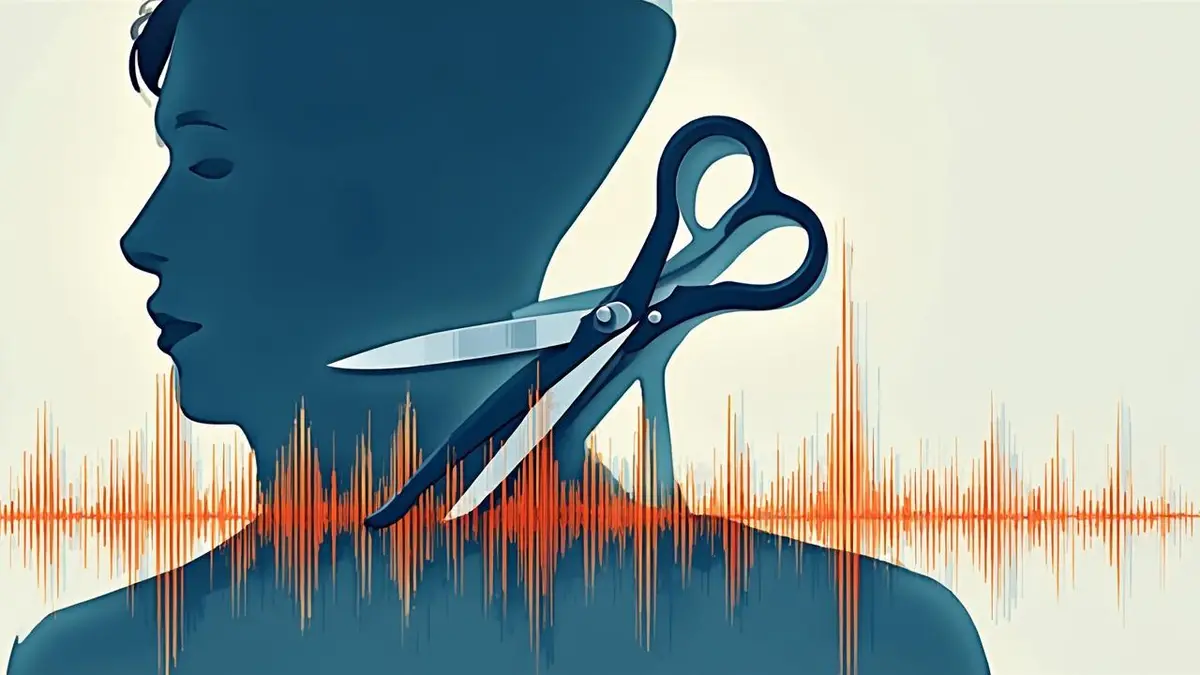
Anyone who has edited a podcast knows the feeling. The words line up perfectly, the sentences connect, and yet the result sounds off. A hard consonant lands like a small explosion. A cut that should be invisible leaves a faint, uneasy bump. On the Chinese tech blog 少数派 (Shaoshu Pai, or “Minority”), a recent post dug into why these glitches happen, and the answer has less to do with software than with how human brains process sound.
The first culprit is the pop. When a speaker makes a plosive sound — the p in “pop,” the b in “but,” the t in “top” — a burst of air hits the microphone diaphragm and creates a low-frequency thump. In a live conversation, your brain barely notices. In a recording, especially one played through earbuds, that thump can dominate. Editors often cut on these sounds without realizing they have sliced right through the air burst, leaving a fragment that sounds like a click.
The second, subtler problem is meaning. Two sentences can be grammatically joined and still feel wrong when placed back to back. Cognitive psychology calls this a coherence gap. Listeners do not just decode words; they build a mental model of who is speaking, what they intend, and how the ideas connect. A cut that removes a breath, a filler word or a small pause can erase the invisible scaffolding that made the transition feel natural. The words survive; the intent does not.
Pauses matter more than most editors think. A pause is not empty space — it is a signal. It tells the listener that a thought is ending or a new one is beginning. Trim too aggressively and the conversation starts to feel breathless and artificial, like a machine reading a script. Trim too little and the episode drags. The art is in knowing which pauses carry meaning and which are just noise.
Micro-edits are the third trap. Nudging a word slightly earlier or later to tighten timing can shift the rhythm of a sentence. Speech has a cadence, a kind of music, and listeners are exquisitely sensitive to it. When the beat breaks, the ear flags it instantly, even if the listener cannot say why. This is why some edits sound “off” without any obvious flaw: the rhythm has been disturbed.
The post’s practical takeaway is that good editing starts with listening, not cutting. Play the raw audio first and note where the energy rises and falls. Mark the natural boundaries between ideas. Then cut at those boundaries rather than at arbitrary points. Leave a little air around transitions. When a plosive sits on a cut, move the edit a few milliseconds earlier or later to avoid the burst.
None of this requires expensive tools. A basic editor, a pair of headphones and a bit of patience will do. What it requires is empathy — the willingness to hear the recording the way a listener will, not the way an editor sees it on a timeline. The best edits are the ones nobody notices, and the only way to achieve that is to understand the mind on the other side of the headphones.