United's Crisis Deepens: Carrick on the Brink After Bournemouth Rout
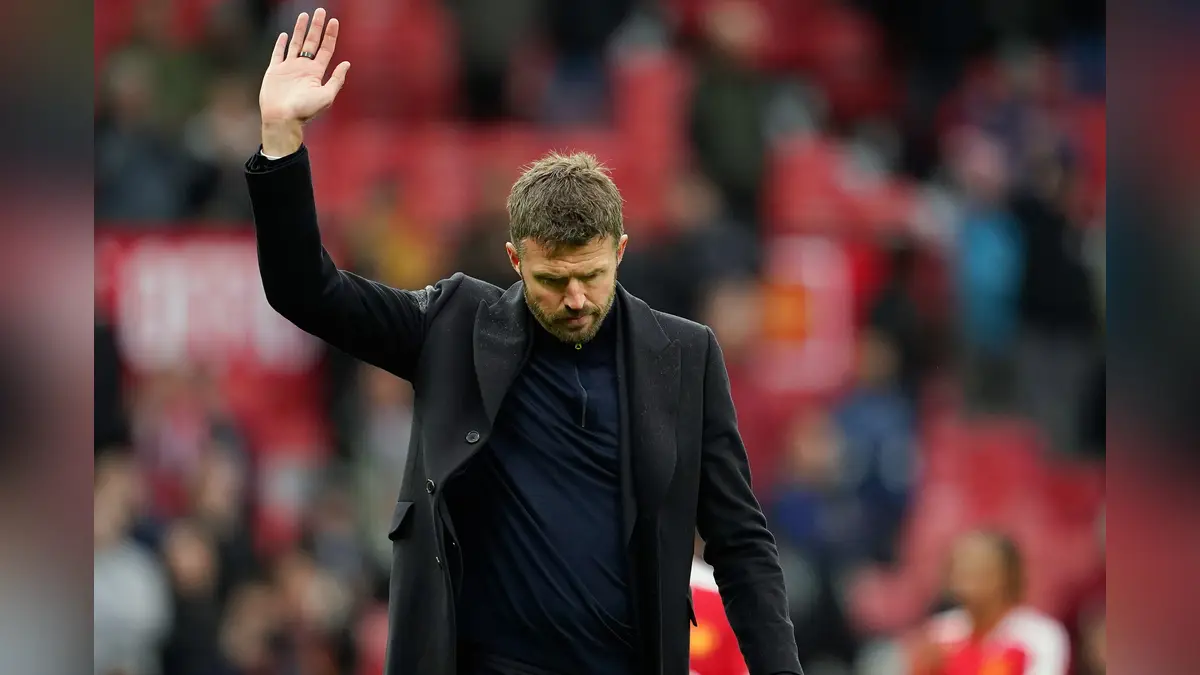
Manchester United’s season has reached the point where the conversation is no longer about tactics. A 0-3 defeat to Bournemouth at Old Trafford on Sunday, the club’s eighth match without a win, left manager Michael Carrick insisting he did not expect to be dismissed even as reports emerged that the board had convened an emergency meeting to discuss his position.
Carrick, who took charge after a playing career spent largely in United’s midfield, struck a defiant note in his post-match comments. But the wider picture is grim: a home crowd that booed the team off, a squad that has now dropped points across a run stretching back weeks, and a hierarchy that is reportedly weighing its options.
According to reports, if the coaching staff does change, football director Jason Wilcox favours Eddie Howe, the former Newcastle manager, whose Premier League experience makes him an attractive and comparatively affordable candidate. Unai Emery is also said to be held in regard, though prising him from Aston Villa would cost considerably more.
The sharpest criticism, however, came from a familiar voice. Gary Neville, the former United captain turned broadcaster, did not blame the manager. He described Carrick as honest, reliable, decent and professional — precisely the qualities he says the players lack. Neville called the Bournemouth performance terrible and empty, and traced a pattern across recent matches against Tottenham, Como, Atletico Madrid, Leeds and Fulham: no output, wandering minds, going through the motions.
That diagnosis cuts at the heart of United’s modern troubles. For more than a decade the club has cycled through managers while the underlying structure — recruitment, standards, accountability inside the dressing room — has drifted. Neville’s argument is that replacing another coach changes the name on the door without touching the culture behind it.
There is a counter-argument, and it is the one boards usually listen to. A manager is the cheapest lever to pull. Sacking Carrick would be quick, visible and would buy the executives time. Appointing Howe, a proven organiser with a track record of stabilising clubs, would fit that logic. It would also be the fourth permanent or interim reset in a relatively short span.
Beyond Manchester, the result matters because United remain one of the most-watched clubs on earth, with a global fanbase that treats every crisis as a referendum on the ownership as much as the dugout. Broadcasters and sponsors watch the same table as the supporters.
The immediate question is timing. United cannot afford a prolonged drift, and the international break offers a natural window for a decision. The longer one is delayed, the more the story becomes about indecision at the top rather than underperformance on the pitch.
For Carrick, the next fixture is now the only argument that counts. For the players Neville criticised, it is a chance to prove him wrong. Neither has much room left.