A Jersey Swap That Never Happened Becomes Worlds' Quietest Meme
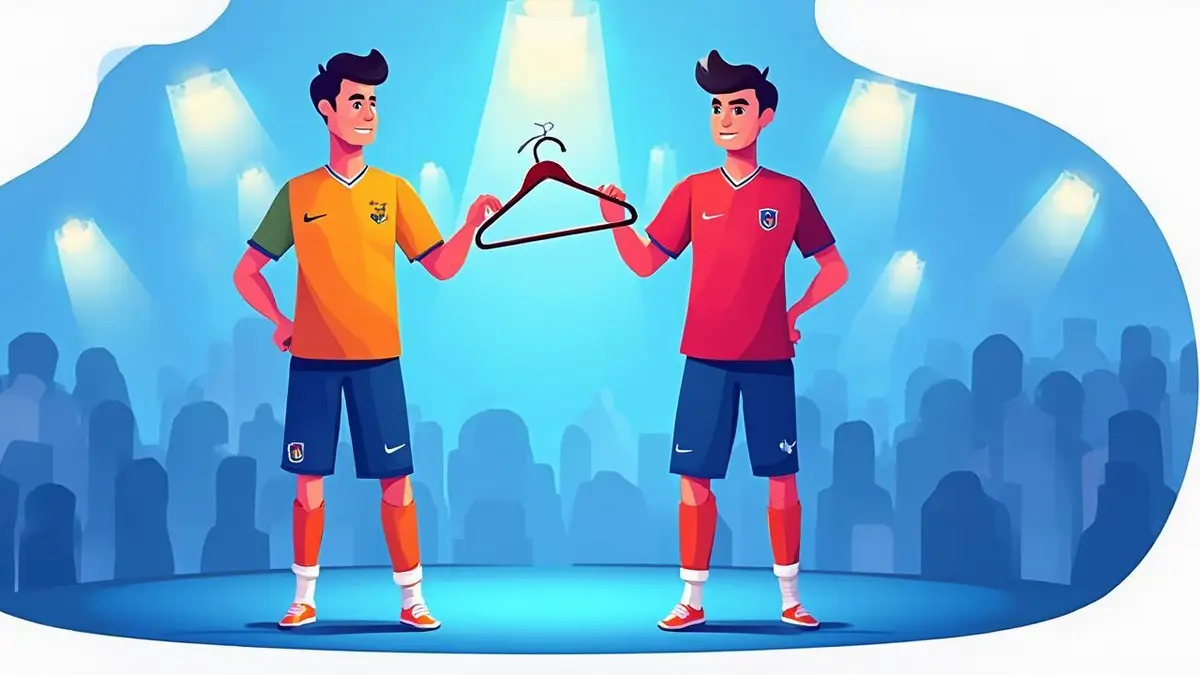
At the League of Legends World Championship, the biggest annual tournament in competitive gaming, the most-discussed moment of the Swiss stage’s opening round had nothing to do with a fight in the lane. It was about a T-shirt.
Fans noticed that TES support Zhuo and HLE top laner Zeus look alike — close enough that the resemblance became a running joke online. When the draw put the two teams against each other in the first round of the Swiss stage, the joke turned into a campaign: supporters urged TES to arrange a jersey exchange between the two players, a lighthearted way to mark the coincidence on the world stage.
TES tried. The club’s official account later explained that it had submitted the request, and that HLE had apologized: the Korean team had not packed any spare jerseys. The swap could not happen. Within hours, the non-event was one of the most-viewed topics on Chinese social platforms, discussed less for the outcome than for the politeness of the refusal.
The story might have ended there, as a footnote. Instead, HLE’s next match brought iG’s top laner, known to fans as Guma, and a jersey exchange did take place. The contrast — a swap declined and then completed — gave the joke a second act, and fans filled in the blanks themselves. Was it a scheduling quirk? A matter of what was in the luggage? The absence of an official explanation only made the speculation more enjoyable.
What makes the episode notable is how little it involved. No match result changed, no player was criticized, and no one suggested bad faith. An esports team travels with limited kit, and a spare shirt in the wrong size helps no one. Yet the incident produced more conversation than many actual games, because it was small, verifiable and mildly absurd — the ideal shape for an internet story.
It also shows how the fan relationship with professional players has changed. A decade ago, supporters followed results; today they follow faces, voices and personalities, and they organize around them. A resemblance between two players becomes a request; a request becomes a club statement; a statement becomes a meme. The players themselves barely had to participate. Zeus and Zhuo were, in effect, characters in a story their fans wrote.
For the clubs, the takeaway is gentler than a crisis. TES earned credit for asking and for explaining the refusal honestly. HLE’s apology read as courteous rather than dismissive. In a scene where fan goodwill is a real asset, a graceful answer to a silly request is worth more than silence. The jersey that never crossed the stage may end up remembered longer than one that did.
What comes next is the usual rhythm of a tournament: matches will resume, results will accumulate, and the joke will fade. But the next time a team packs for an international event, someone in the kit room may think about spare shirts. And if the two lookalikes ever meet again on stage, the exchange fans asked for the first time will be the first thing anyone mentions.