Shanghai's Forgotten Shipyard Island Becomes a Gaming Playground
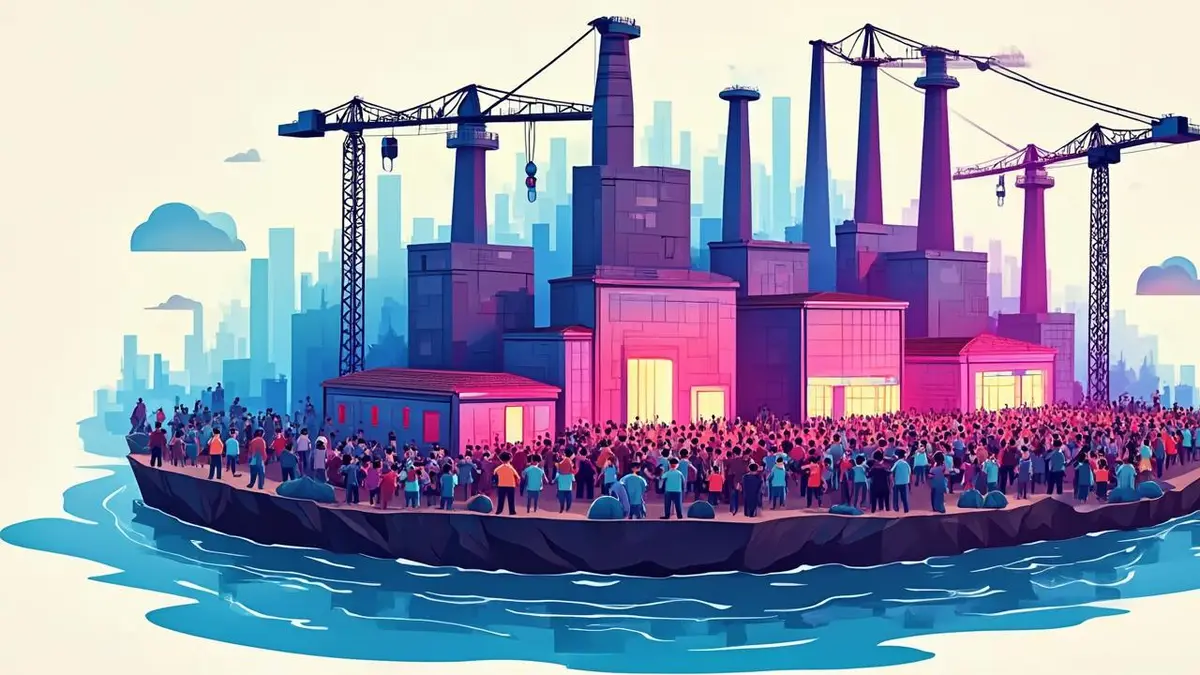
For decades, Fuxing Island was the kind of place Shanghai residents knew by name but rarely visited. A closed inland island on the Huangpu River, it hosted shipyards, a fish processing plant and a marine fisheries company lined along Gongqing Road. When the city’s industries upgraded, the old rhythms of shipbuilding and canning faded, and the island sat quietly in the middle of one of China’s busiest cities.
That changed this National Day holiday. More than 200,000 young people crossed onto the island, according to Chinese gaming outlet Toutiao Gaming, drawn by a festival that mixed cosplay, gaming and electronic music. During the day, visitors tackled game challenges across the old docks; at night, the same space turned into a party. Cosplay enthusiasts, gamers and electronic music fans filled the wharves that once handled cargo ships.
The sudden popularity of Fuxing Island is part of a broader trend in Chinese cities: turning industrial heritage into cultural venues. Old factories, warehouses and docks are being converted into creative parks, exhibition spaces and event grounds. The island’s closed-off character, once a barrier, now gives it a distinct atmosphere that purpose-built convention centers cannot match. Its location in the city center makes it accessible, while its industrial bones provide a backdrop that feels authentic rather than staged.
The festival also reflects how gaming culture in China has moved from screens into physical space. Gaming events are no longer just about trying new titles. They are social gatherings where cosplay, music and community meet. For young Chinese, attending such an event is a way to express identity and spend a holiday with like-minded people. The turnout on Fuxing Island suggests that demand for these experiences is large and growing.
For Shanghai, the event offers a template. The city has been looking for ways to activate underused spaces and attract young talent. An island that once symbolized heavy industry now symbolizes a different kind of production: cultural experiences. If the festival becomes a regular fixture, Fuxing Island could join the ranks of Shanghai landmarks that reinvent themselves for each generation.
The story also says something about how Chinese youth spend their holidays. Instead of traditional sightseeing, many are choosing events tied to their hobbies. That shift is visible in the popularity of gaming conventions, music festivals and pop-up markets across the country. Fuxing Island’s transformation from shipyard to playground is a vivid example of that change.
What happens next depends on planning and investment. The island needs transport links, facilities and a calendar of events to keep visitors coming. But the 200,000 who showed up this October have already proven the concept. A place that was once off the map is now on it, and the crowd that put it there is young, digital and hungry for spaces that feel like their own.