Inside the $4.2 Billion Bet on America's Nuclear Comeback
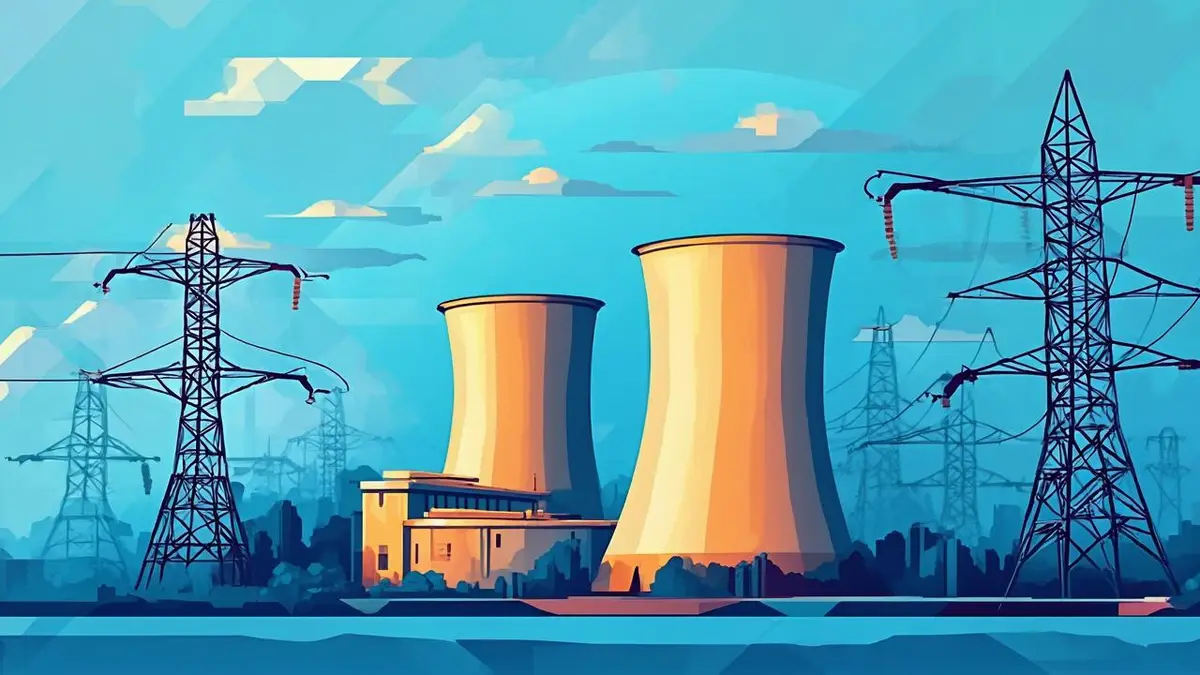
The United States Department of Energy has announced a $4.2 billion investment aimed at boosting nuclear power generation in Pennsylvania and Ohio while helping to bring energy costs down. The package is one of the largest single federal commitments to nuclear energy in years, and it lands at a moment when grid operators, data-center builders and manufacturers are all asking the same question: where will the electricity come from?
The answer, increasingly, is reactors that already exist. According to the announcement, the projects supported by the investment will preserve nearly 4 gigawatts of reliable baseload power and add 433 megawatts of new nuclear capacity. They are also expected to support roughly 3,000 project-related jobs, spread across engineering, construction, maintenance and operations. Baseload power is the industry term for electricity that flows around the clock regardless of weather, and nuclear plants are among the few sources that can do it at scale without burning fuel.
The package does not stop at American borders. A conditional loan commitment from France’s state-owned utility, Électricité de France, includes financing options that could fund a future power-uprating project at the Comanche Peak nuclear plant in Texas, owned by Vistra. An uprating is exactly what it sounds like: squeezing more megawatts out of an existing reactor by upgrading turbines, generators and other equipment, rather than building a new plant from scratch. It is often the cheapest route to new nuclear capacity, because the site, the license and the grid connection already exist.
Pennsylvania and Ohio are a fitting stage for this push. Pennsylvania is home to some of the oldest commercial reactors in the country and has long been one of the largest nuclear-generating states. Ohio has a smaller but strategically placed fleet, sitting close to the industrial heartland and to the fast-growing electricity demand of the Midwest. Both states have watched coal plants retire and have felt the pinch of volatile natural gas prices. Keeping reactors running means keeping the lights on when demand peaks.
The timing reflects a broader shift in how investors and policymakers think about nuclear energy. For years, the industry’s story was one of closures and cost overruns. Now it is being recast as a source of firm, low-carbon power that complements wind and solar, which are cheap but intermittent. Technology companies racing to build artificial intelligence data centers have made the demand signal even louder, because those facilities need enormous amounts of steady electricity, and they need it soon.
Money alone will not settle every question. Nuclear projects face long permitting timelines, skilled-labor shortages and the challenge of keeping costs predictable over decades. Supporters argue that federal backing lowers the risk enough for private capital to follow, and that extending the life of existing plants is far faster than waiting for next-generation designs to mature. Critics counter that the same money could fund more renewable capacity more quickly.
What is clear is that the $4.2 billion is not just an energy story. It is a bet that reliable power is now an industrial policy issue, tied to jobs in Pennsylvania and Ohio, to French-American utility partnerships in Texas, and to whether factories and server farms can count on the grid. For global readers watching where the next wave of electricity investment lands, this is a signal worth following.