CATL Sells Australia More Than Batteries: A Grid Promise
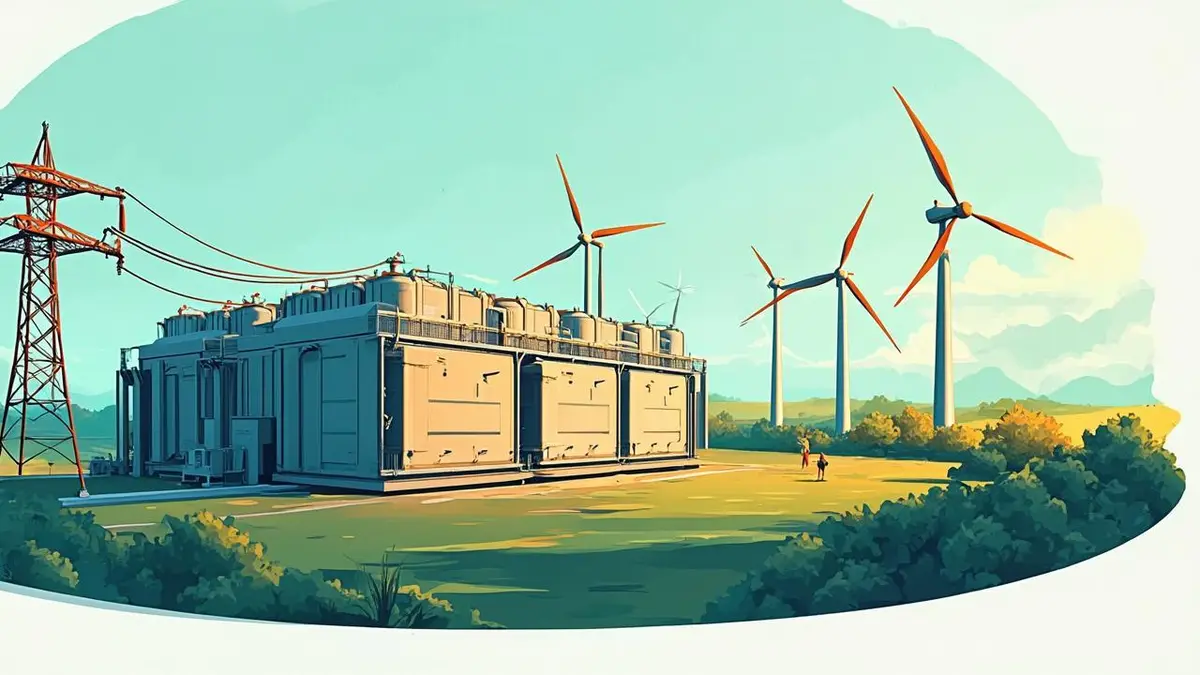
At the All-Energy Australia 2026 exhibition, CATL (Contemporary Amperex Technology Co. Limited, the world’s largest battery maker) did not simply unveil another energy storage cabinet. According to Chinese tech outlet TMTPost, the company presented a long-term assetization plan for storage — effectively selling a promise that a project will perform and connect to the grid over its lifetime, not just delivering cells on a pallet.
The distinction sounds technical but changes the business. A cell vendor competes on price per kilowatt-hour. A grid-performance partner competes on how reliably a battery system delivers power when the network needs it, how quickly it can be commissioned, and who carries the risk if it underperforms after a decade. That is a harder promise to make and a harder one for rivals to match.
Australia is a revealing stage for that pitch. The country’s main grid now draws a large and growing share of its electricity from solar and wind, which makes storage the bottleneck. Rooftop solar floods the system at midday and disappears in the evening, so utilities and developers need batteries that can absorb cheap daytime power and release it during the evening peak. The market rewards firms that can guarantee availability, not just supply hardware.
TMTPost framed the broader Chinese presence at the show as a shift from selling products to selling system capability — not simply a wave of exports or a spillover of domestic price wars. That reading matters because Chinese storage and solar makers have spent years competing fiercely at home on cost. Moving to overseas grid services is a way to escape that squeeze, but it requires local engineering, grid-code compliance and long-term maintenance crews.
The same outlet reported other China-linked energy and consumer stories from the same period, but the storage angle stands out for its scale. Battery storage is the piece that lets intermittent renewables act like dispatchable plants, and the companies that can underwrite that performance take on a role closer to an infrastructure operator than a parts supplier.
For global readers, the practical question is what a grid promise actually contains. A credible offer typically bundles performance guarantees, remote monitoring, spare-parts commitments and a clear answer on who pays if the system degrades faster than expected. Those terms, not the headline capacity number, determine whether a project’s owners sleep at night.
Competitors are watching closely. If CATL can make long-term assetization the norm in Australia, other markets with high renewable shares — and other Chinese battery makers following it abroad — may face pressure to offer similar guarantees. That would raise the bar for everyone and could thin margins for vendors that cannot back their claims.
Australian developers, meanwhile, will test the pitch in real projects. The next signal is whether upcoming storage tenders start scoring lifetime performance and grid-services capability more heavily than upfront price. If they do, the shift from selling cells to selling promises will have moved from a trade-show message into procurement rules.