Chinese Transformer Maker Rides US Data Center Boom With $132 Million Order
Shares of Sanxing Electric, a Ningbo-based power equipment maker, hit their maximum allowed daily gain of 10 percent at the opening bell on September 24 and stayed pinned there for the rest of the session, closing at 16.25 yuan and lifting the company’s market value to roughly 22.8 billion yuan. The spark was a contract announced the previous evening: a $132 million order, worth about 885 million yuan, to supply transformers for a data center project in the United States.
According to the company’s disclosure, the winning bid came from Ningbo Aux Intelligent Technology, a wholly owned subsidiary of Sanxing Electric. The subsidiary will act as supplier of oil-immersed transformers for a US data center energy storage project, which the company described as an important breakthrough in its data center distribution business in the American market. The contract equals about 6.16 percent of Sanxing’s audited 2025 revenue, making it a single order large enough to move the needle for a manufacturer of this size.
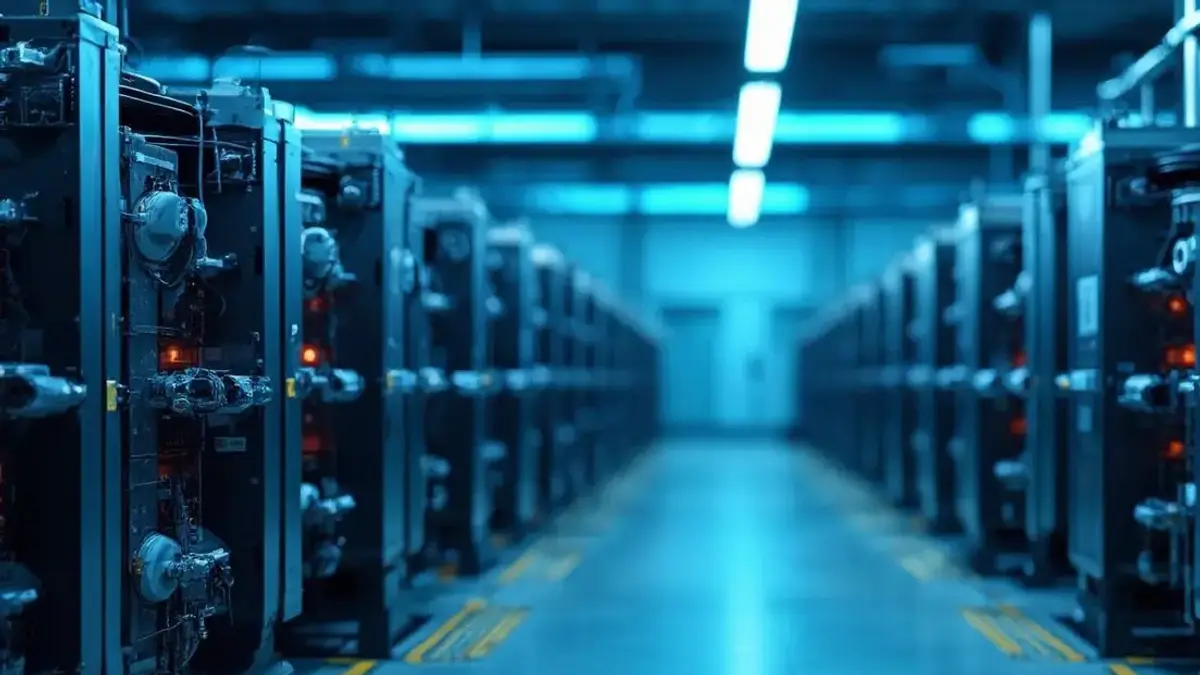
For readers unfamiliar with the hardware, oil-immersed transformers are the heavy, tank-like devices that step voltage up or down across power grids, with their windings bathed in mineral oil for cooling and insulation. They are unglamorous but indispensable, and data centers are consuming them at a remarkable pace. The artificial intelligence boom has turned computing campuses into some of the most power-hungry facilities ever built, and each one needs dense networks of transformers and energy storage to feed racks of servers reliably around the clock.
The order also lands in a global market that has been conspicuously short of such equipment. Utilities and developers across North America and Europe have reported long waiting times for large power transformers as grids expand and both renewable generation and data centers pile on demand. Chinese manufacturers, with deep production capacity and competitive pricing, have been steadily winning share in overseas distribution equipment markets, and buyers have increasingly turned to them to fill the gap.
Sanxing Electric is affiliated with the Aux Group, a Ningbo conglomerate better known internationally for air conditioners and home appliances. The listed company has built its business on smart metering and power distribution products, and winning a bid in the United States, where grid equipment standards and certification requirements are demanding, serves as a form of external validation. Success on one project often opens the door to follow-on orders from other developers racing to complete facilities.
The market’s reaction was emphatic. Under China’s A-share rules, most main-board stocks can rise or fall no more than 10 percent in a single day, and Sanxing’s shares sealed at that ceiling from the first minutes of trading, a so-called one-way limit-up that traders read as a sign of intense buying interest with sellers absent. For a company valued at around 22.8 billion yuan, one overseas contract worth nearly 900 million yuan proved enough to reset expectations overnight.
The deal is a small but telling example of how the AI infrastructure race is reshaping global trade flows. While headlines tend to focus on chips and servers, the buildout ultimately depends on a vast upstream chain of electrical hardware, and that is exactly where Chinese factories have depth and scale. For investors, the questions now concern execution: whether Sanxing can deliver on schedule, whether the US project leads to additional contracts, and whether data center demand can offset softer spending from traditional utility customers. For the moment, the market has voted with its orders.