Anne Carson Wins the 2026 Nobel Prize in Literature
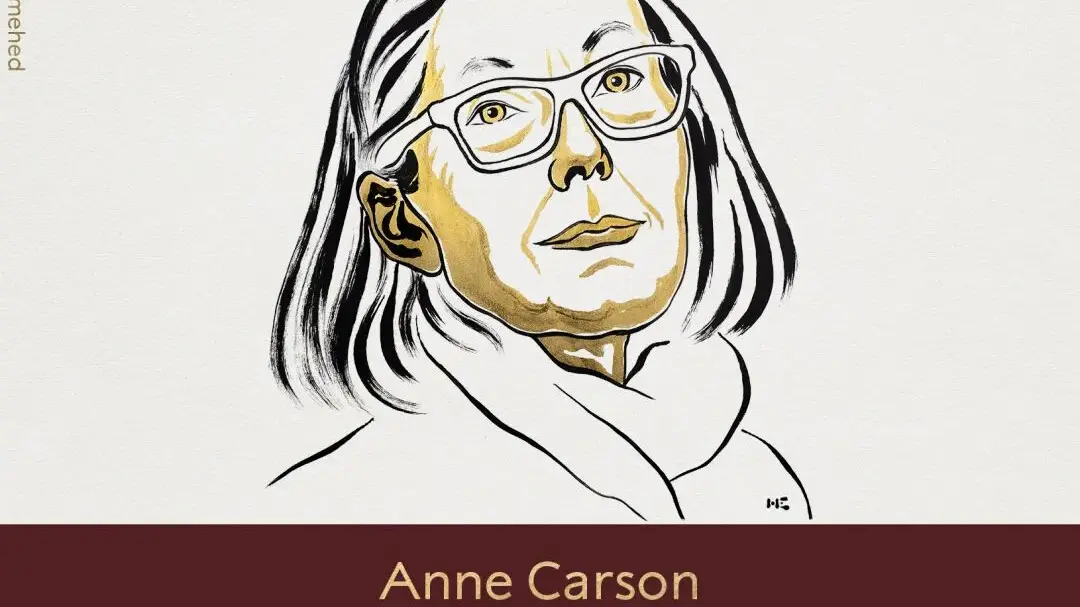
The 2026 Nobel Prize in Literature has gone to Anne Carson, the Canadian poet, essayist and translator, with the Swedish Academy praising her “bold and inventive oeuvre” that creates new forms for contemporary literature through a playful conversation with the classical tradition. For readers in China, where her books have circulated quietly for years in translation, the news landed as both a surprise and a kind of confirmation.
Carson, born in Toronto in 1950, trained as a classicist and spent years teaching Greek and Latin before her writing found a wide audience. Her best-known book, Autobiography of Red, reimagines an ancient Greek lyric fragment about a mythic monster as a modern novel in verse about a boy growing up, falling in love and nursing a wound. Her style is hard to label: she blends poetry, essay, translation, collage and even opera libretto, and she rarely repeats a form twice.
Chinese critics who followed the announcement focused less on her awards and more on what her work does emotionally. One widely shared commentary described her as answering contemporary loneliness with very old literature, using Greek myth and Sappho’s fragments to talk about desire, grief and the difficulty of knowing another person. That framing resonated in a country where discussions of solitary urban life, delayed marriage and emotional distance have become a staple of social media.
The prize also drew attention to the small but dedicated community of translators who brought her work into Chinese. Carson is notoriously difficult to render: her lines break in unexpected places, her vocabulary slides between registers, and her footnotes are often part of the poem rather than an explanation of it. Translators say the challenge is not vocabulary but rhythm, since her voice depends on pauses as much as words.
Publishing houses in China moved quickly after the announcement. Several reported a spike in orders for existing editions of her poetry and essays, and booksellers noted that readers were searching for titles that had been in print for years without much fanfare. The pattern echoes previous Nobel years, when a single announcement turns a niche author into a bestseller overnight and tests how fast the industry can restock.
For a global audience unfamiliar with Carson, the easiest entry points are Autobiography of Red and her translation of Sappho, If Not, Winter. Both are short, strange and rewarding, and neither requires any background in Greek. What they ask for instead is patience with a writer who treats reading as a collaboration, leaving gaps for the reader to fill.
The Nobel is often described as a lifetime achievement award, but in Carson’s case it may function differently: as an invitation to a wider public to encounter writing that refuses easy categories. Her win also serves as a reminder that the oldest stories in the Western canon are still capable of describing very new feelings, which is precisely the argument her work has been making for decades.