LeBron James Sets NBA Oldest Record as 76ers Stun Cavaliers
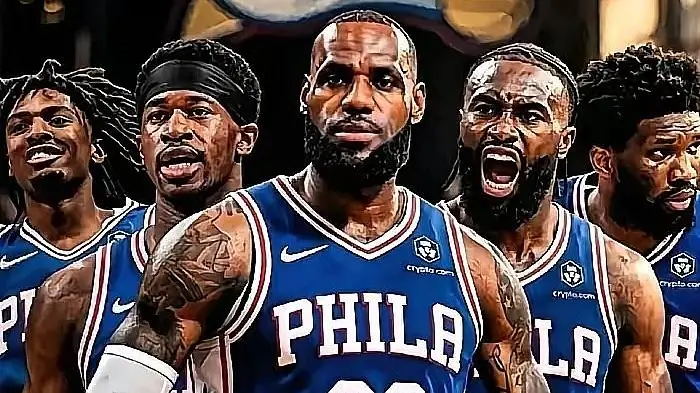
LeBron James keeps rewriting the record book in a league that keeps getting younger. On the night of October 23, 2026, in Philadelphia, the 41-year-old posted 15 points, 10 rebounds and 5 assists, becoming the oldest player in NBA history to reach that statistical line. The numbers themselves are modest by his standards. The age beside them is not.
The game around him turned into something stranger and more memorable. The 76ers trailed the Cleveland Cavaliers by 29 points in the third quarter, a deficit that had historically been a death sentence in Philadelphia. According to the team’s own history, it had faced a similar hole 156 times and won none of them. A comeback rate of zero percent is the kind of statistic that ends conversations before they start.
Then the fourth quarter happened. Philadelphia erupted for 32 points in a single period, flipping a game that had looked like garbage time into a 114-106 win. The Cavaliers, who had controlled the first half, suddenly could not hold a lead that had once felt unassailable. It was less a tactical masterclass than a collapse meeting a surge, and the building responded accordingly.
Tyrese Maxey, the 76ers’ All-Star guard, described the halftime mood as calm rather than accusatory. Players, he said, spoke to each other like brothers, agreed on what had gone wrong, and committed to competing harder in the second half. That framing matters in a league where blowouts often dissolve into finger-pointing and quiet resignation. Philadelphia chose the other path.
For James, the evening was another entry in a career that has long since outrun normal expectations. A 15-10-5 line is routine for a player who has spent more than two decades as one of the sport’s central figures. Producing it at 41 is not. Age records in basketball tend to be small, unglamorous footnotes, but they carry a real question: how long can a body and a mind hold a game that rewards explosiveness above almost everything else?
The NBA has watched a generation of stars extend their careers with better training, load management and shooting. James has been the most visible test case, and each milestone invites the same debate about how much of his longevity is discipline, how much is genetics, and how much is the modern sports-science apparatus that surrounds elite athletes. The answer is probably all three, in proportions nobody can measure.
The broader takeaway belongs to the comeback. Teams talk constantly about finishing games and controlling what they can control. Philadelphia’s fourth quarter was a reminder that a 29-point lead is not a possession or a statistic; it is a feeling, and feelings can break. Cleveland’s players will spend the flight home wondering how a night that started so comfortably ended in a loss.
What comes next is a schedule that will not slow down. James and his team will keep playing, and every box score will be scrutinized for signs of decline or defiance. The record will likely be broken again by someone, eventually. For now, the oldest line in the book has a new name attached to it, and the 76ers have a comeback to replay for years.