DeepSeek's New 'Wish-Style' Coding Lets Beginners Build Without Code
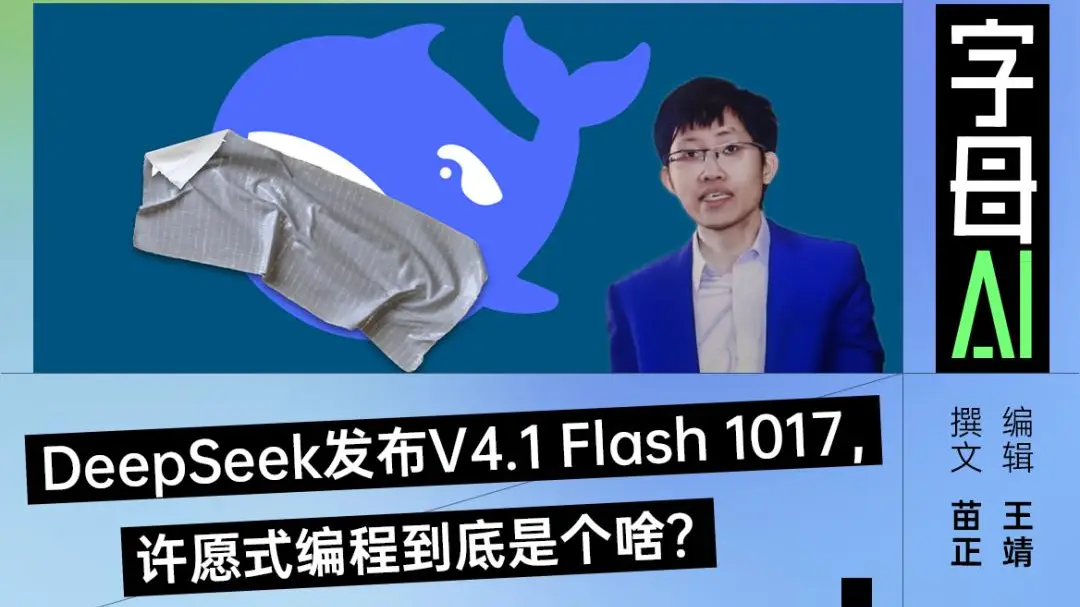
DeepSeek released an update to its model on October 17 called DeepSeek V4.1 Flash 1017, and its headline feature has a memorable name: “wish-style programming.” The idea is simple. A user tells DeepSeek what they want to build in ordinary language — no parameters, no technical details, no prepared assets — and the model carries the project through the whole production loop on its own.
The framing is squarely aimed at beginners. Experienced engineers already know how to prompt a model step by step, but wish-style programming assumes the user does not. You describe the outcome you want, and the system fills in the rest: structure, assets and the finished output. It is a small phrase that describes a big shift in how AI coding tools are being sold — not as assistants for professionals, but as a way for anyone to make something.
The timing is notable because of who DeepSeek is. The Hangzhou-based lab built its reputation on models that developers admire for their efficiency and open availability, not on polished consumer products. Its founder, Liang Wenfeng, once told a closed-door gathering of investors that the company had not put much effort into consumer-facing products and had at times not even wanted to maintain those users. The new release reads like a reversal of that stance.
That tension is what makes the update interesting. A company that built its following among engineers is now courting the people those engineers usually serve. Wish-style programming is a clear signal that DeepSeek sees ordinary users — students, small business owners, hobbyists with an idea and no technical training — as a market worth competing for.
It also fits a broader pattern in the Chinese AI industry. Model makers are moving from raw capability benchmarks toward products that hide complexity. The pitch is no longer about how many parameters a model has, but about how little the user needs to know to get a result. For a lab like DeepSeek, whose technical reputation is already established, the next frontier is usability.
The name itself carries a bit of marketing charm. “Wish-style” suggests that the gap between an idea and a finished product has shrunk to a single sentence. Whether the output lives up to that promise in practice is another matter — coding agents still stumble on complex, multi-step projects, and a beginner may not know enough to spot when something has gone wrong.
Still, the direction is clear. DeepSeek’s founder may have said the company was not focused on consumers, but the product roadmap now says otherwise. For global readers watching China’s AI scene, this is a reminder that the competition is no longer only about who has the smartest model. It is also about who can make that intelligence feel effortless to the person holding the phone.