China's MINISFORUM Trims Its Beloved Mini Workstation for Budget Buyers
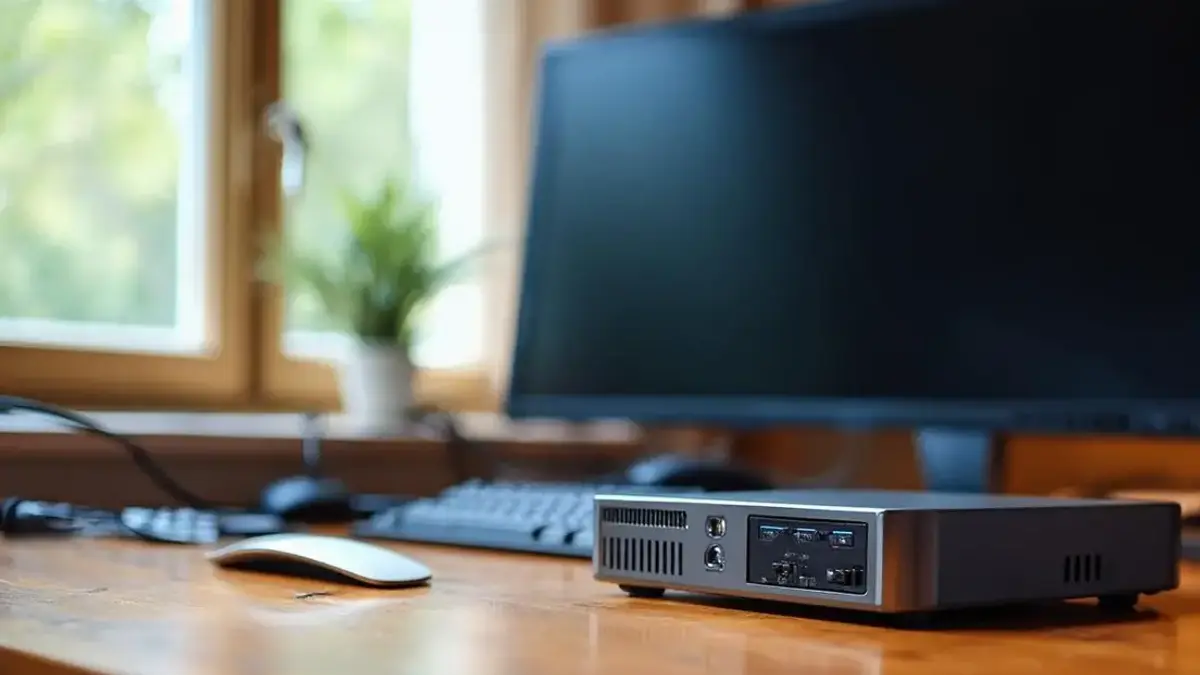
Shenzhen-based computer maker MINISFORUM has quietly released a new version of one of its most admired products: the MS-01 SE, a scaled-back edition of the company’s workstation-grade mini PC. The original MS-01 built a devoted following among hardware hobbyists for packing serious computing into a chassis barely bigger than a thick book. The SE keeps the same compact shape but trades away several premium features in exchange for a friendlier price.
Mini PCs, fully functional desktop computers shrunk to the size of a lunchbox, have become one of the most competitive corners of the personal computer industry, and Chinese brands lead it. Companies such as MINISFORUM, based in the southern manufacturing hub of Shenzhen, have turned what was once a niche category into a global phenomenon, shipping compact machines to gamers, home-lab tinkerers and small businesses worldwide. The MS-01, marketed as a workstation model, was aimed at users who need expandability rather than just small size.
The most visible change sits in the machine’s brain. Where the original model offered a choice of higher-end Intel processors, the SE edition comes only with the Core i5-12600H, a capable mid-range chip from Intel’s twelfth generation. Memory support moves to two DDR4 SO-DIMM slots, the older and cheaper class of laptop memory, rather than faster modern modules. The internal PCIe Gen4 expansion slot, used for adding graphics cards or storage controllers, has also been trimmed to four lanes of bandwidth.
The cut that will sting enthusiasts most lives on the back panel. The original MS-01 carried two 10-gigabit SFP+ network ports, versatile connectors prized by home-lab builders who chain their mini machines to fast network storage or run clusters of virtual servers. The SE replaces both with ordinary USB-A ports rated at 480 megabits per second, a small fraction of the original’s throughput. For buyers who treated the MS-01 as a compact network hub, that single change removes much of the machine’s specialist appeal.
Wireless connectivity has been reworked as well, shifting to a MediaTek MT7902 wireless card. None of these changes is exotic; each is a textbook cost-engineering decision, swapping expensive components for affordable ones while preserving the essential skeleton of the product. The result targets buyers who liked the MS-01 concept but balked at its flagship configuration and price.
The launch reflects a broader playbook among Chinese mini PC makers. Rather than ceding the entry level to generic no-name boxes, established brands are building budget and premium versions of the same chassis, much as smartphone makers did a decade ago. For MINISFORUM, the SE likely serves two purposes: defending the low end of the market against cheaper rivals, and giving cautious first-time buyers a lower-risk way into a platform they can upgrade later.
Reactions in the hobbyist community tend to split along predictable lines. Home-lab veterans who valued the twin high-speed network ports see little reason to switch, and some lament that affordable 10-gigabit networking is becoming rarer rather than more common. Others welcome a cheaper on-ramp: for a home file server, a lightweight office desktop or a student’s dorm computer, the trimmed specification loses little that most people would actually notice.
The mini PC boom shows no sign of slowing. As Chinese manufacturers squeeze ever more capable hardware into ever smaller boxes, the contest is shifting from raw specifications toward pricing strategy and audience focus. The MS-01 SE is a small product carrying a telling message: the era when China’s compact PC brands competed only on value is over, and they are now learning to compete on choice.